Profit Loss Form AlternativeOne month, or the whole year.
You have a yearly total, and you cannot point to the month that created it.
Name the monthName the month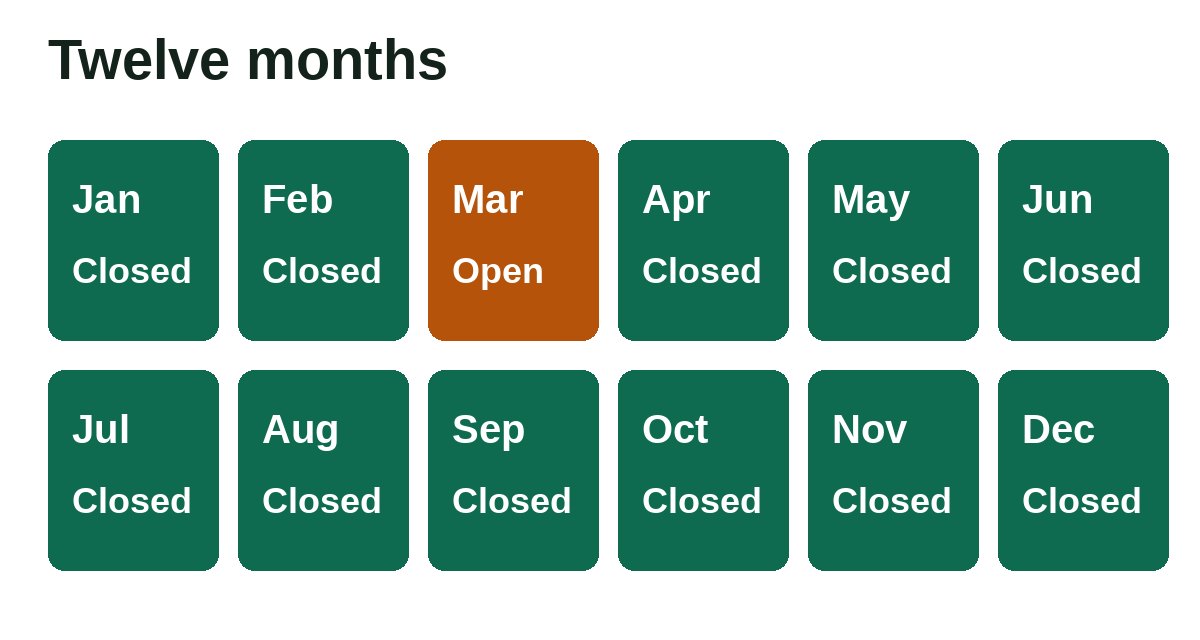
A year is twelve closed months, or it is a story.
Click to read closed months ›Tap to read closed months ›
A monthly page is one closed month. A yearly page is those months stacked, with the same rules on every one. If March does not match the statement, the year does not get to average March away. We keep March open and we keep it out of any total we would hand to someone else.
Owners often keep a running spreadsheet that feels like a year because it has a lot of rows. Rows are not months. A month exists when its statement, its uncleared list, and its books agree. Until then the row is a note. The yearly total becomes useful on the day the last open month closes, not on the day the spreadsheet got long.
The yearly bill and the monthly page can both be right.
Click to read both readings ›Tap to read both readings ›
A yearly page is what a return and many lenders eventually read. A monthly page is how you notice, in June, that the cost of being open has outrun the work. Waiting for the yearly page to discover that is how a surprise survives until filing season. We would rather hand you the month while there is still a month left to change how you operate.
If you have eleven quiet months and one wild one, the year will show the wild one and the months will show when it happened. Both readings matter. We do not collapse them into a single average that hides the month the account actually moved. Name the wild month when you write. The quiet months can wait until that one is tied out. March stays named even when the year looks fine.
One month or the whole year

You will be talking to the Steven Palmieri practice.