Profit Loss Form AlternativeWhat it cost to deliver.
A supplier bill is on the counter and you are not sure the job it paid for has left.
Name the jobsName the jobs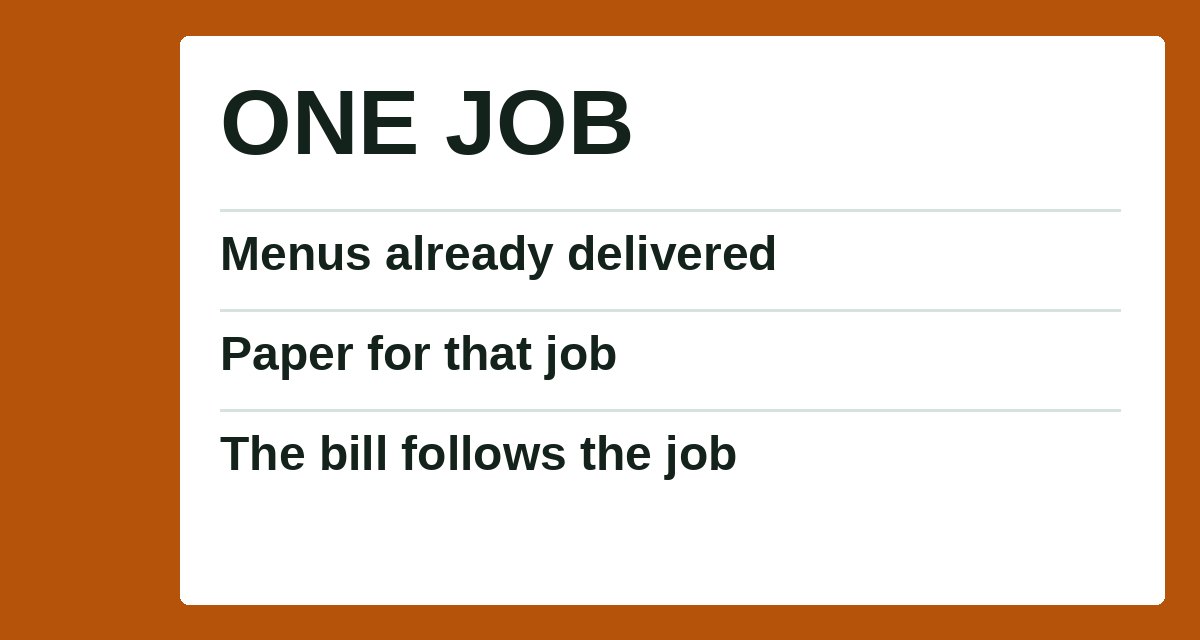
The bill follows the job.
Click to read job bills ›Tap to read job bills ›
Cost of sales is what it took to produce work the customer already received. Paper and ink for menus that left this month belong here. An outside printer's bill for those same menus belongs here. The working paper is the bill sitting with the job, not a round number chosen because the shelf looks thinner.
A bill that arrived for a job still in the shop is not a cost of this month. The paper is still yours. Putting that bill on the page early makes the month look worse than the work that actually left, and it makes next month look better for no new reason. We keep the unshipped job off the line until it leaves.
Rent does not belong on this line.
Click to read rent line ›Tap to read rent line ›
Rent, software, insurance, and the owner's own pay are not the cost of a single delivered job. They are the cost of being open, and they have their own line. Mixing them into cost of sales makes the gross result meaningless, which is the figure a lender uses to see whether the work itself pays.
If you cannot point at the job a supplier bill belongs to, the bill is not ready for this line. Say so. An unnamed bill on the uncleared list is more honest than a cost of sales figure that nobody can trace to a delivery. Clip the bill to the job name before the call, and say whether that job has already left the shop. A bill with no job name stays off the line until you can point at the delivery. Say the month the job left. A job that left in a prior month stays on that prior month.
Which jobs left this month

You will be talking to the Steven Palmieri practice.