Profit Loss Form AlternativeCash and profit are different questions.
The spreadsheet total does not match the bank, and you cannot see which figure a landlord should be shown.
Show the bank gapShow the bank gap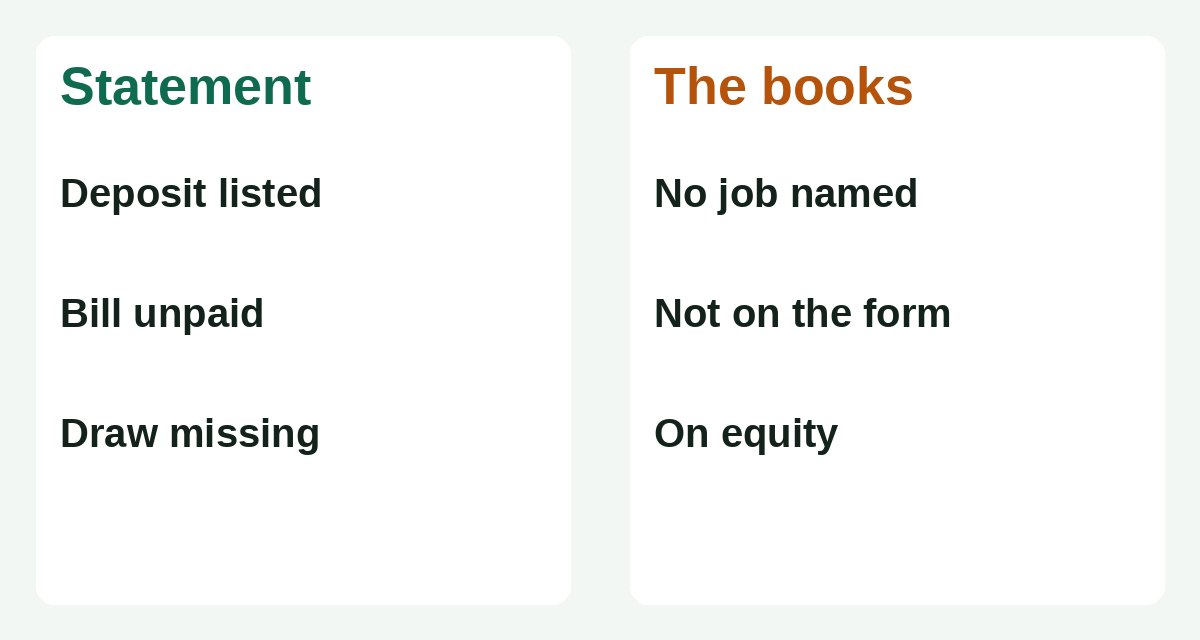
Profit and cash move on different days.
Click to read the timing ›Tap to read the timing ›
You can deliver a job, earn the revenue, and still be waiting on the customer. Profit sees the job. Cash sees the day the money arrives. You can also pay a supplier next month for paper you used this month. Profit sees the paper. Cash sees a later departure. Neither timing is a mistake. Treating them as one number is the mistake.
Loan payments, equipment purchases, and money the owner takes home all change the bank and skip the profit page, or touch it only in a different way. A principal payment is not an expense. A draw is not an expense. The equipment purchase becomes a cost over the months it is used, not all on the day it was bought. The statement is where those departures are proved.
The uncleared list is the bridge.
Click to read the list ›Tap to read the list ›
We list what the statement shows that the page does not, and what the page shows that the statement does not yet. Outstanding deposits. Unpaid bills. Draws. Loan movements. When that list, the statement, and the books describe the same money, the month is closed. The profit page can then be read without pretending it is a bank balance.
If your spreadsheet has one total that you cannot find on the statement, start there. Bring both. The first reading is usually a transfer, a personal item, or a sale in the wrong month. We name it. We do not force the two totals to match by editing the one that looks more convenient. The unnamed gap is the thing to send. Circle it on the statement before you write. That circled gap is enough to start the hour.
Why the bank is a different number

You will be talking to the Steven Palmieri practice.