
Profit Loss Form AlternativeThe statement that shows how you are doing.
You were asked for a profit and loss statement, and the file on your screen does not feel like the month you just lived. We build that statement from closed months, and Steven Palmieri, a Tax CFO and the Entrepreneur's CFO, reads it with you.
Send my P&LSend my P&L
Who asked you for a P&L?

You will be talking to the Steven Palmieri practice.
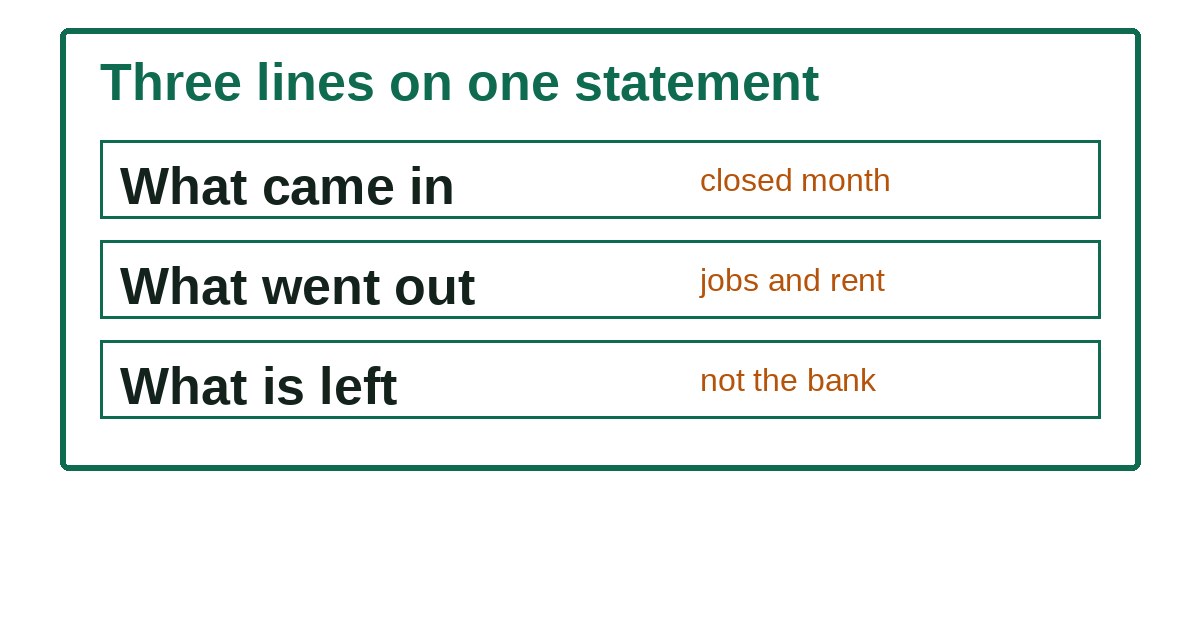

What actually came in
That deposit felt like a good week, and then you could not name the job it belonged to.
Click to see the deposits ›Tap to see the deposits ›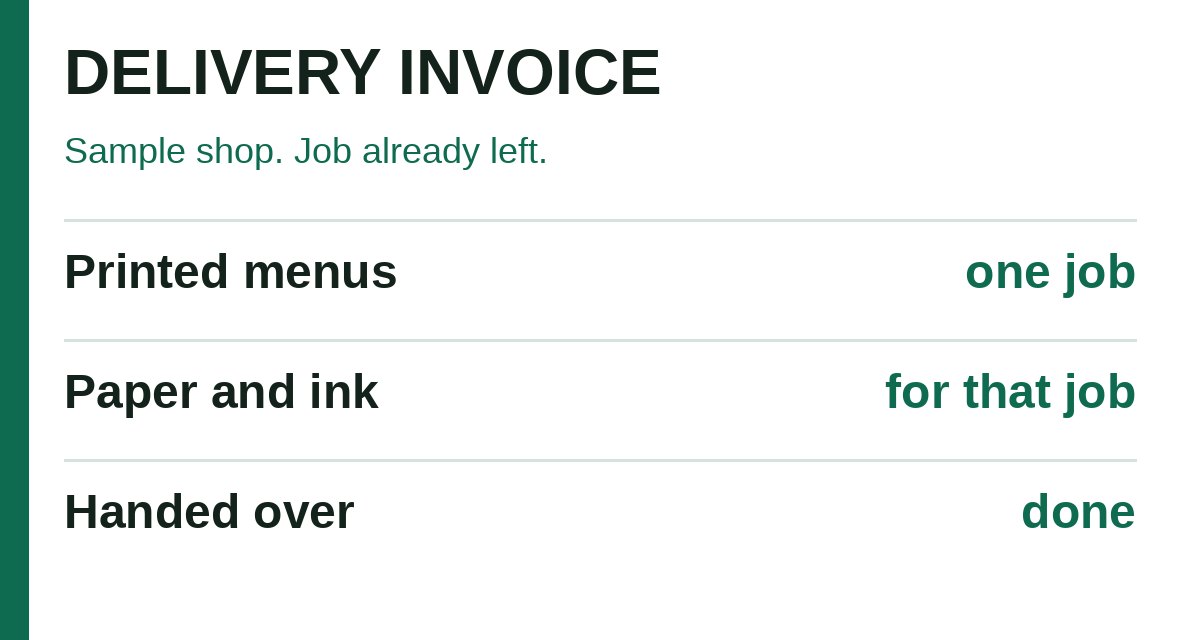
What it cost to deliver
The supplier bill is sitting on the counter, and the job it paid for has not left.
Click to see job cost ›Tap to see job cost ›
What it cost to be open
Rent left the account in a quiet month, and the statement still has to show it.
Click to see open cost ›Tap to see open cost ›
What is left, and why it is not cash
The bottom looks fine tonight, and the bank app tells a thinner story.
Click to see what remains ›Tap to see what remains ›
Owner draws stay off the statement
Money you took home for groceries does not shrink what the month earned.
Click to see owner draws ›Tap to see owner draws ›
An open month is still a guess
You almost sent the export, and a deposit from yesterday is still missing.
Click to see month status ›Tap to see month status ›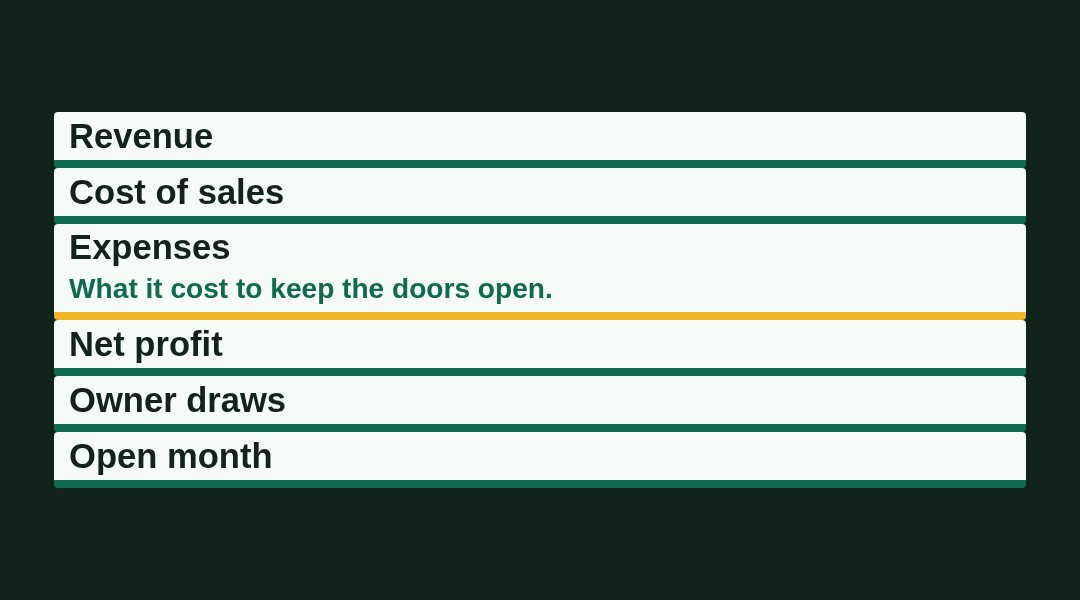
Six lines of the page
Open a line. Each note is one afternoon an owner has on that line, in the words we use on the call.
1What actually came in Came in
A loan, a transfer from savings, or last month's sale can hit the account and still not be this month's work. You feel the deposit. The first line only wants the job that left.
Deposits that match a job stay on the profit page.
2What it cost to deliver To deliver
Rent, the software, and your own pay feel as if they belong beside the paper bill, because they left the same account. They are the cost of staying open, and they have their own line.
A bill for a job that left stays on the profit page.
3What it cost to be open To be open
A grocery run left on the shop card on a Tuesday. It felt like a shop cost because the card was the shop card. It is personal, and it comes off the statement.
Rent and insurance stay on the profit page.
4What is left What is left
The bottom can look healthy while the account is thin, because a customer still owes you. Tonight's bank balance asks a different question from how the month's work went.
The bottom is a reading, and the bank is a different figure.
5Draws stay off this page The draw
Money you took home for the week is a draw against what you own in the shop. Putting that transfer on the statement makes the month look worse than the work was.
Money taken home is a draw, and it stays off this page.
6An open month is a guess Still open
You almost sent the export, and a deposit from yesterday is still missing. That statement can still change. A lender should see it only after the bank agrees.
Hand the page over only after the statement agrees.
A sample print shop
Click to read the sample ›Tap to read the sample ›
The shop in this example is invented. Two people print menus. No client file was opened, and no real balance is hiding under a changed name.
Card batches for jobs that left this month are revenue. A transfer from savings is not. Paper for those jobs is cost of sales. Rent is the cost of being open. A grocery run on the same account is personal and leaves the page. What remains is profit, and it will not equal the bank, because a customer may still owe, a supplier may be unpaid, or the owner may have taken money home.
The page is ready when the statement, the uncleared list, and the books name the same money. A card batch with no menu job beside it stays off the revenue line until the shop names the customer. We do not bury it in revenue. Before that agreement, the page is a draft.
The form is one page, written line by line in plain words. When the statement, the uncleared list, and the books name the same money, that is the statement we hand to the person who asked. An open month stays a draft on the counter. Steven Palmieri closes those months with you, and then the two of you look at which line moved and what the rest of the month should do about it.
The month you can stand behind
Name the month someone asked you to show, and we will say whether that month is closed.
You will be talking to the Steven Palmieri practice.