Profit Loss Form AlternativeWhat it cost to be open.
The spreadsheet has one fat expense line, and half of it may be personal.
Name the costsName the costs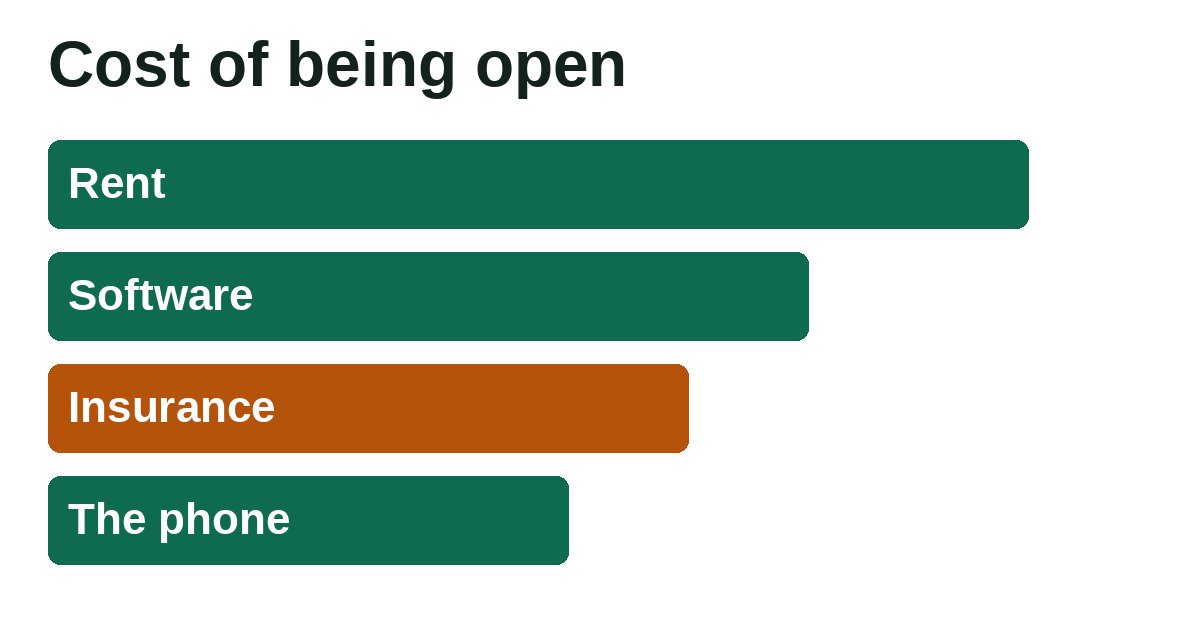
The doors had a cost even in a quiet month.
Click to read quiet months ›Tap to read quiet months ›
Rent for the room, the software that sets the type, the insurance on the press, and the phone stay on the page in a quiet month and in a busy one. They land in the month they cover, including a month when only two jobs went out the door. A quiet month does not get to skip the rent so the page looks healthier.
The personal bill is the usual intruder. Groceries, a household repair, a transfer that was really the owner paying themselves. It left the same account, so it feels like a shop cost. It is not. We label it personal and we take it off the page. Leaving it in makes profit look smaller than the work was. A quiet Tuesday still owes the rent.
A yearly bill is still a monthly fact.
Click to read yearly cover ›Tap to read yearly cover ›
Insurance paid once in March is not an expense that exists only in March if it covers the whole year. We spread the cover across the months it protects, and we keep the March cash departure on the bank side where it actually happened. The page then shows the cost of being open each month, and the bank shows the day the money left.
If you only have the yearly total, bring that. We would rather see the policy period than invent twelve equal guesses with no dates. The working paper is the bill plus the months it names. A policy with no dates on it is still useful if you can say when you paid it. Bring that date even if you are unsure of the cover period. The payment date is enough to start.
What kept the doors open

You will be talking to the Steven Palmieri practice.